


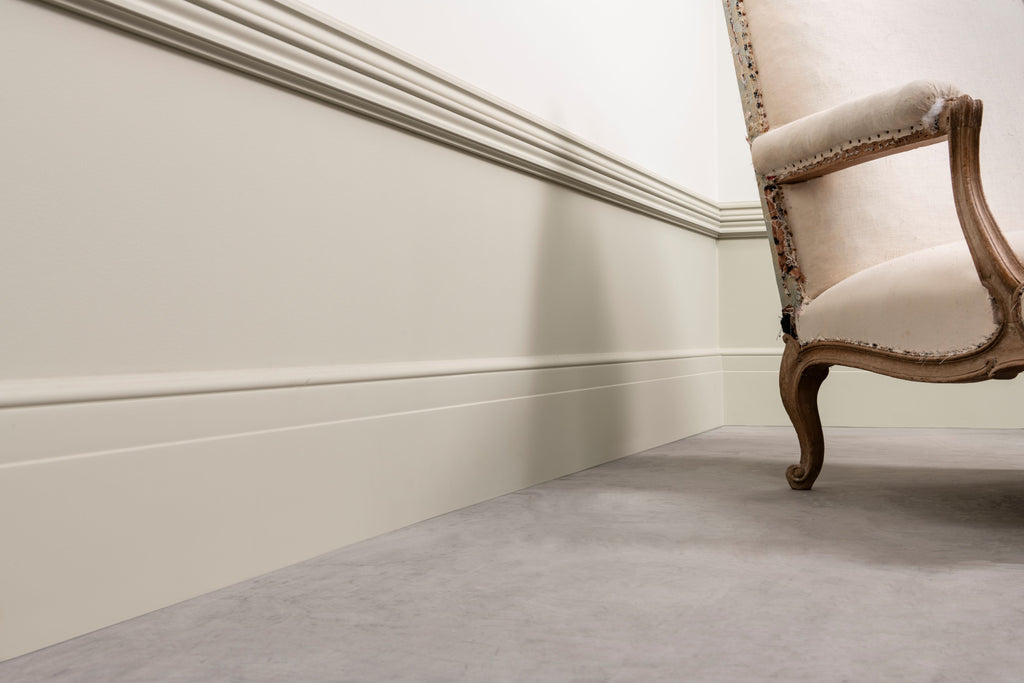
Skirting boards are one of the most overlooked finishing details in an interior — and one of the most impactful. The right skirting profile ties together the floor, wall and architectural scheme, protects walls in high-traffic areas, and gives a room the sense of being properly finished.
Our collection of 72 skirting board profiles covers every style, height and application — from slim contemporary profiles for modern new builds through to tall, ornate Victorian and Georgian designs for period properties and high-ceiling rooms. All profiles are lightweight, waterproof, impact resistant and primed white, ready to paint. They install with adhesive — no fixings required. Many designs also conceal cables behind them — useful for hiding skirting-level wiring.
Browse by height:
- Short skirting (under 70mm) — compact profiles for modern interiors, low ceilings and rooms where understated detail is wanted
- Medium skirting (71–100mm) — the most versatile height range, suits both period and contemporary properties
- Tall skirting (101–140mm) — makes a confident statement, particularly effective in hallways and living rooms
- Extra tall skirting (141–250mm) — grand proportions for high-ceiling period rooms, luxury developments and hospitality interiors
Browse by style:
- Traditional skirting — Torus, Ogee and Victorian profiles for period properties
- Contemporary skirting — clean, minimal profiles with flat faces and simple detailing
- Flexible skirting — bendable profiles for bay windows, curved walls and arched openings
- Skirting board covers — fit over existing skirting for a fast, no-removal update
Skirting height guide:
- Standard UK rooms (2.4m ceiling): 70–100mm height is most proportionate
- Taller ceilings (2.7–3m): 100–140mm looks most considered
- Grand or period rooms (above 3m): 150mm+ creates the right visual weight
Pair with dado rails, wall panelling and coving for a fully resolved scheme from floor to ceiling. See our skirting gallery for inspiration and profile comparisons.
Trade accounts welcome — contact us for specification support and volume pricing. Samples available on most profiles.
Skirting Boards


Skirting Board FAQs
What is a skirting board?
A skirting board, also known as a baseboard or base moulding, is a decorative and protective trim that is installed along the bottom of a wall where it meets the floor. Skirting boards serve both aesthetic and practical purposes in interior design.
What is the purpose of skirting boards?
Skirting boards have several purposes, including:
- Protecting the lower portion of the wall from damage, such as scuffs, marks, and impact.
- Covering the joint between the wall and the floor to create a finished look.
- Concealing wiring, cables, or uneven edges.
- Adding a decorative element to enhance the overall aesthetics of a room.
What are the standard sizes for skirting boards?
Standard skirting board heights typically range from 3 to 6 inches (7.5 to 15 centimetres), and widths can vary. The specific size can be chosen based on the room's dimensions and design requirements. Some skirting boards also come in taller sizes for added impact.
Can skirting boards be painted to match a room's decor?
Yes, skirting boards can be painted in a wide range of colours to complement or contrast with a room's colour scheme. Painting skirting boards is a common practice to achieve a cohesive design.
Are skirting boards purely decorative, or do they have functional benefits?
Skirting boards offer both decorative and functional benefits. While they add visual appeal to a room, they also protect the wall from damage caused by furniture, vacuum cleaners, and foot traffic. Skirting boards can also serve as a transition between different types of flooring.
Can skirting boards be installed by DIY enthusiasts, or is professional installation recommended?
Skirting boards can be installed as a DIY project by individuals with basic carpentry skills. However, for complex installations or if you're unsure about the process, it's advisable to seek professional installation to ensure a precise and secure fit.
Can skirting boards be used in both residential and commercial spaces?
Yes, skirting boards are suitable for both residential and commercial settings. They provide the same protective and decorative benefits in various types of spaces.
Are there different styles and designs of skirting boards available?
Yes, there is a wide range of skirting board styles and designs to choose from, including classic profiles, modern minimalist designs, and decorative patterns. The choice of style can greatly impact the overall look of a room.
How do I clean and maintain skirting boards?
Skirting boards are relatively easy to maintain. Regular dusting and occasional cleaning with a mild detergent and a soft cloth or sponge can help keep them looking fresh and clean. Avoid using abrasive cleaners that could damage the finish.
Can skirting boards be used with other interior trim elements, such as dado rails or picture rails?
Yes, skirting boards can be used in conjunction with other interior trim elements like dado rails, picture rails, and architraves to create a cohesive and visually appealing design scheme. These elements can complement each other to enhance the overall decor of a room.
What is the difference between skirting board and baseboard?
Skirting and baseboard are terms used interchangeably in some regions, but they can refer to slightly different elements in interior design. Generally, "skirting" is a British term, while "baseboard" is more commonly used in North America. Both skirting and baseboard serve the same purpose as protective and decorative trims installed along the bottom of walls where they meet the floor. The choice of term often depends on regional conventions and personal preference, but the function remains the same.


